
info@ryaanranch.org
Vikaspuri, West Delhi, India
Elephants
Elephants
Sharing the Landscape With Giants
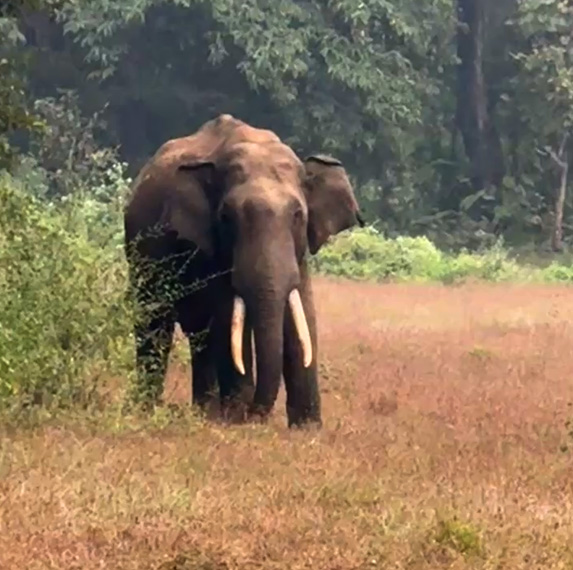
Asian elephants are an important part of the landscape around Ryaan Ranch.
The wider Nedumkayam-Karulai forest environment provides habitat and natural movement routes used by wild elephants.
Their presence is a reminder that forests are living systems and that wildlife needs space to move according to its natural patterns.
From Our Monitoring Cameras
Free to Roam, Swim and Graze
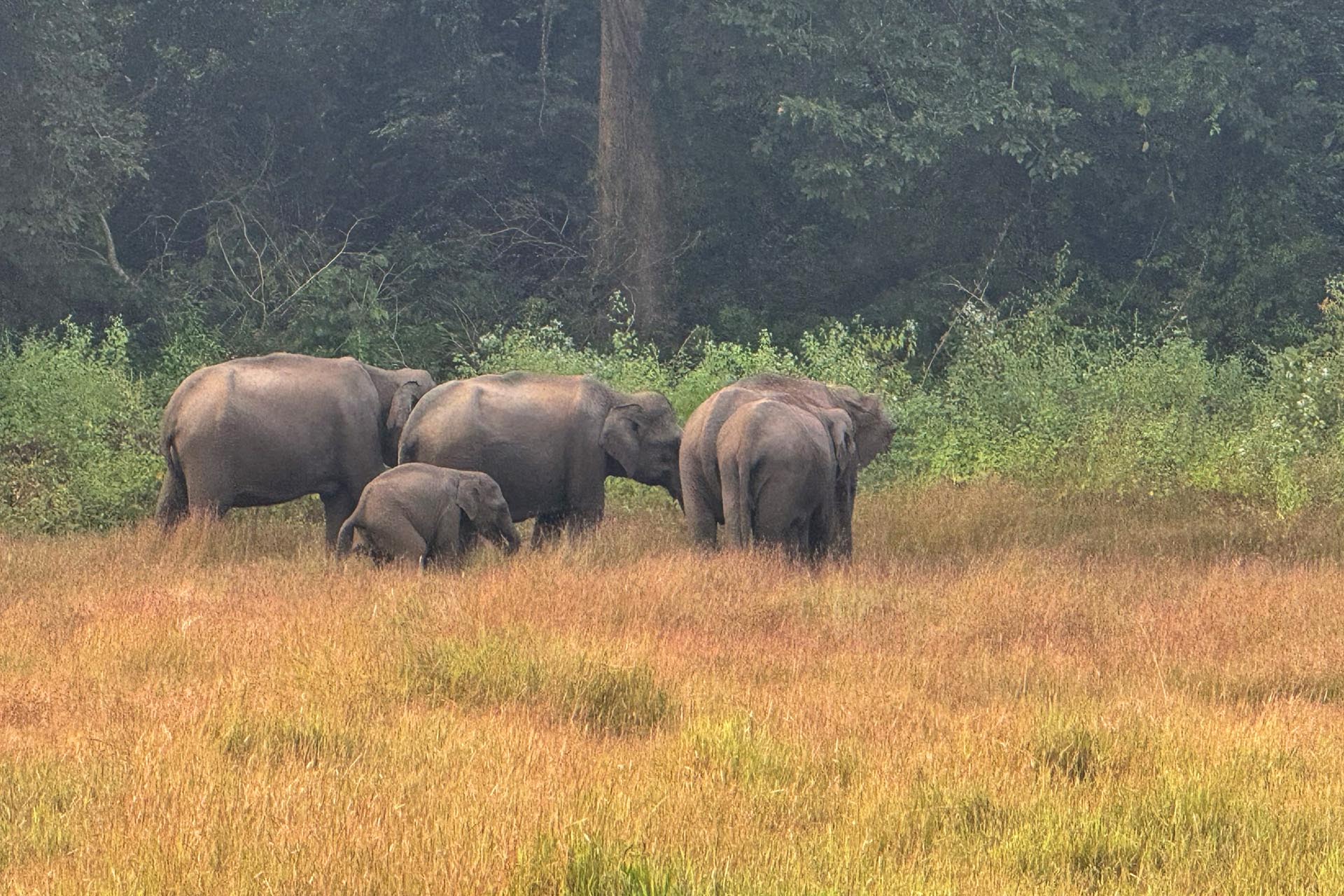
The elephants come to Ryaan Ranch on their own terms. No fences turn them back, no roads cut across their path and no crowds wait for them.
Our monitoring cameras catch them almost every day. Herds wander in from the forest and spread out across the open grassland to graze. Families wade into the pond to drink, bathe and swim, and come out again when they are ready. Mothers walk with their calves, unhurried, and the little ones doze off in the grass while the herd feeds around them.
We do not bring them here and we do not hold them here. We simply keep the water clean, the forage growing and the passage open, season after season, so the land is always ready when they return.
Their freedom to move is our responsibility to respect.
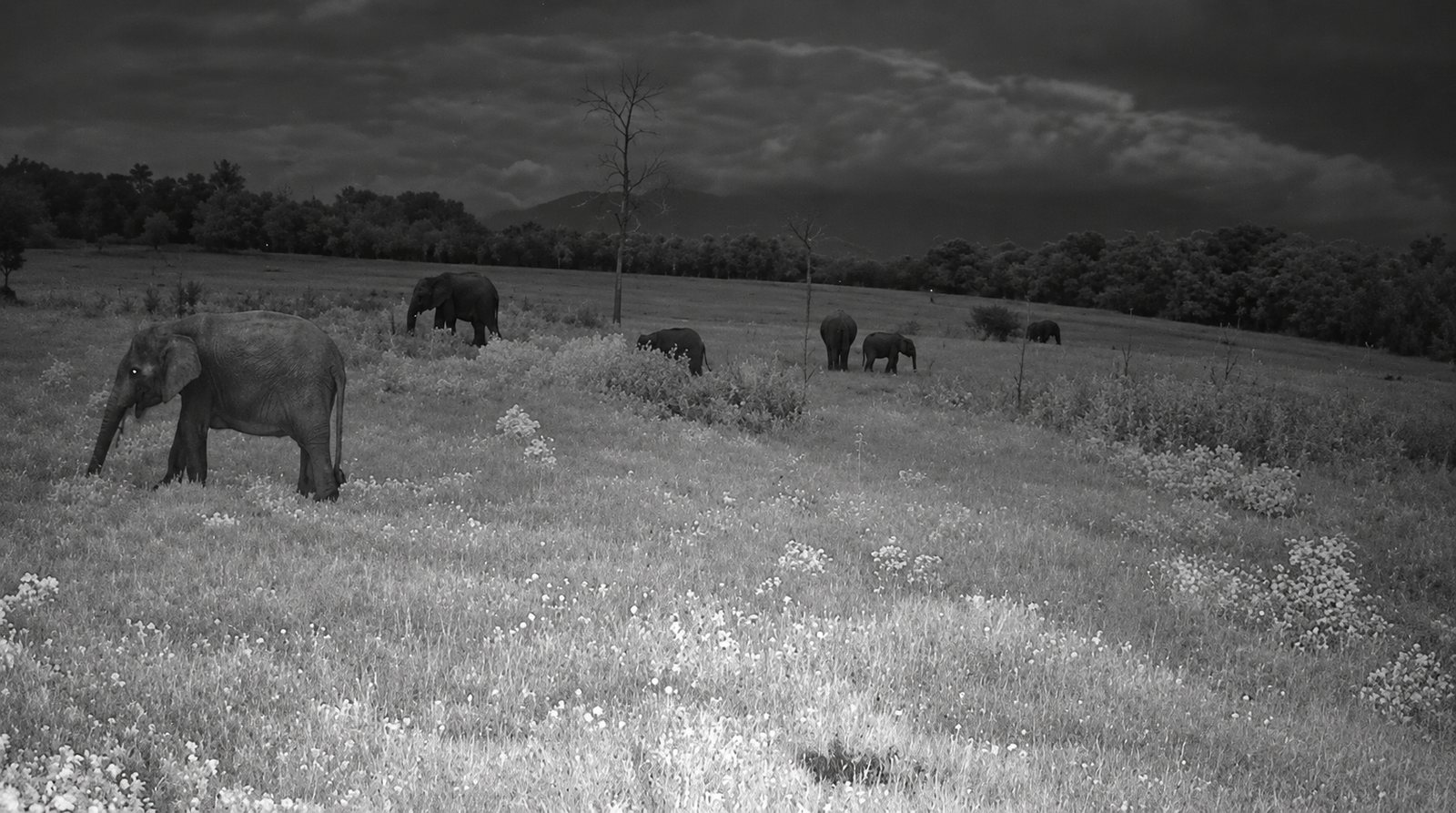
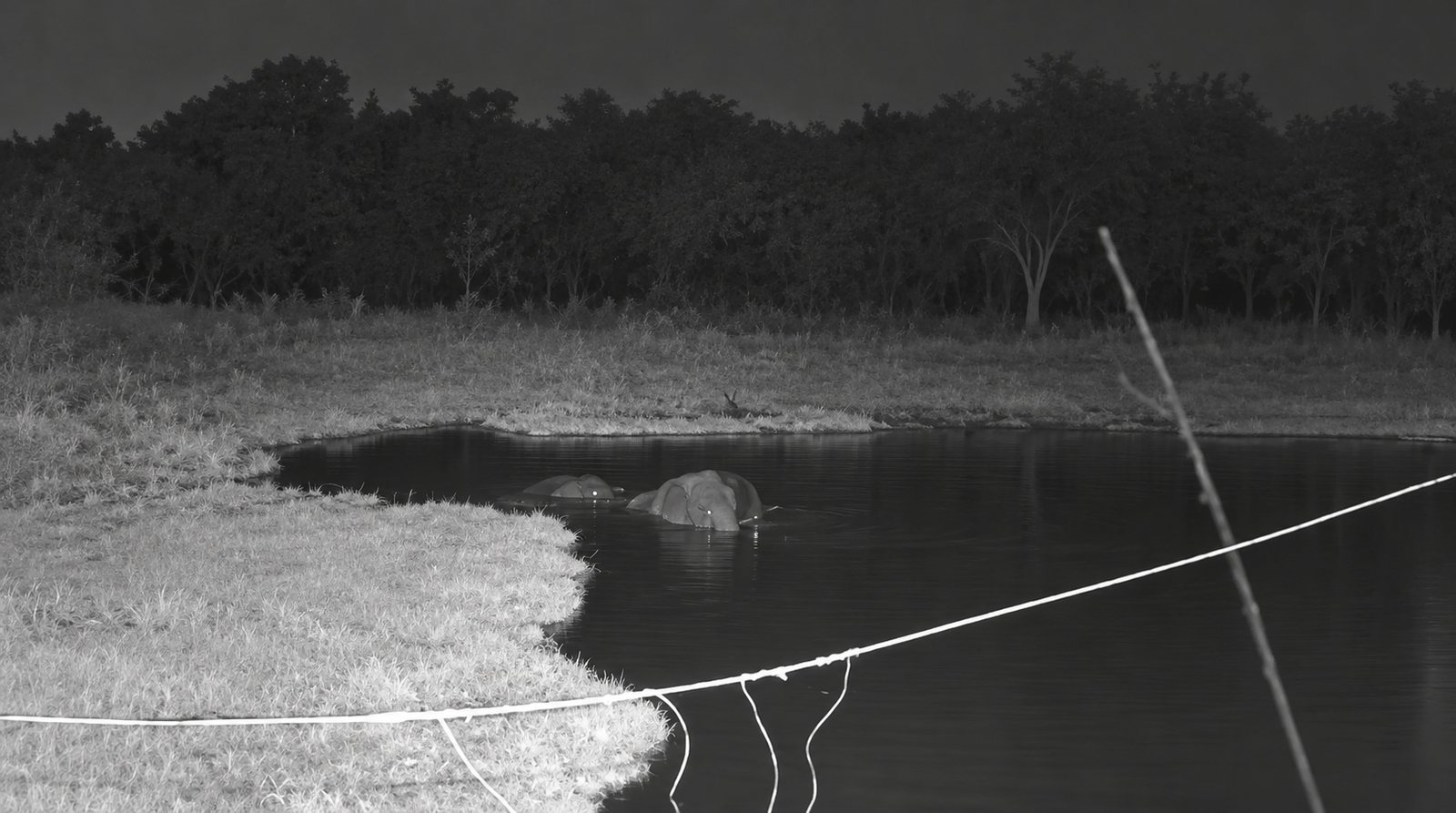
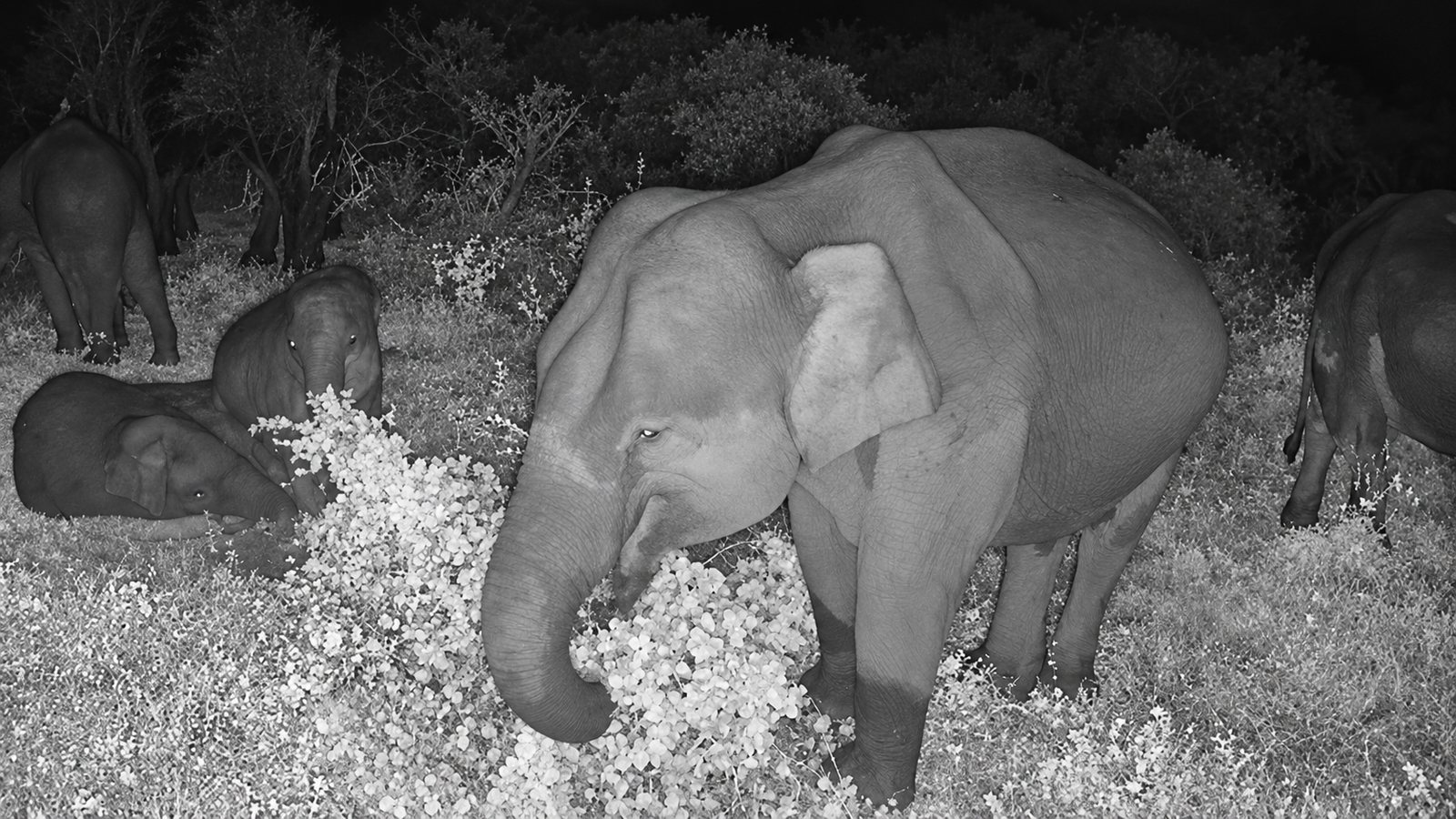
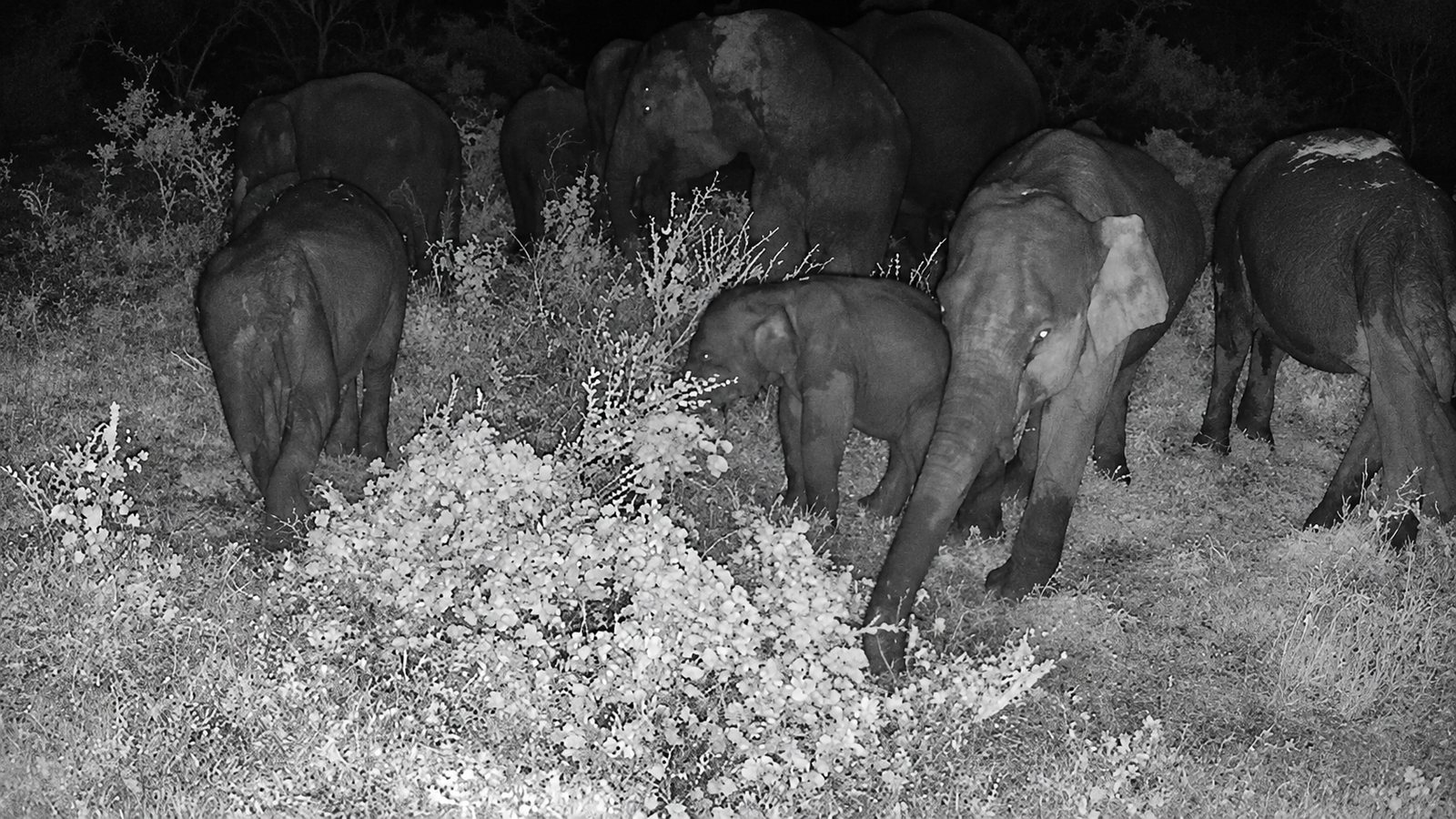
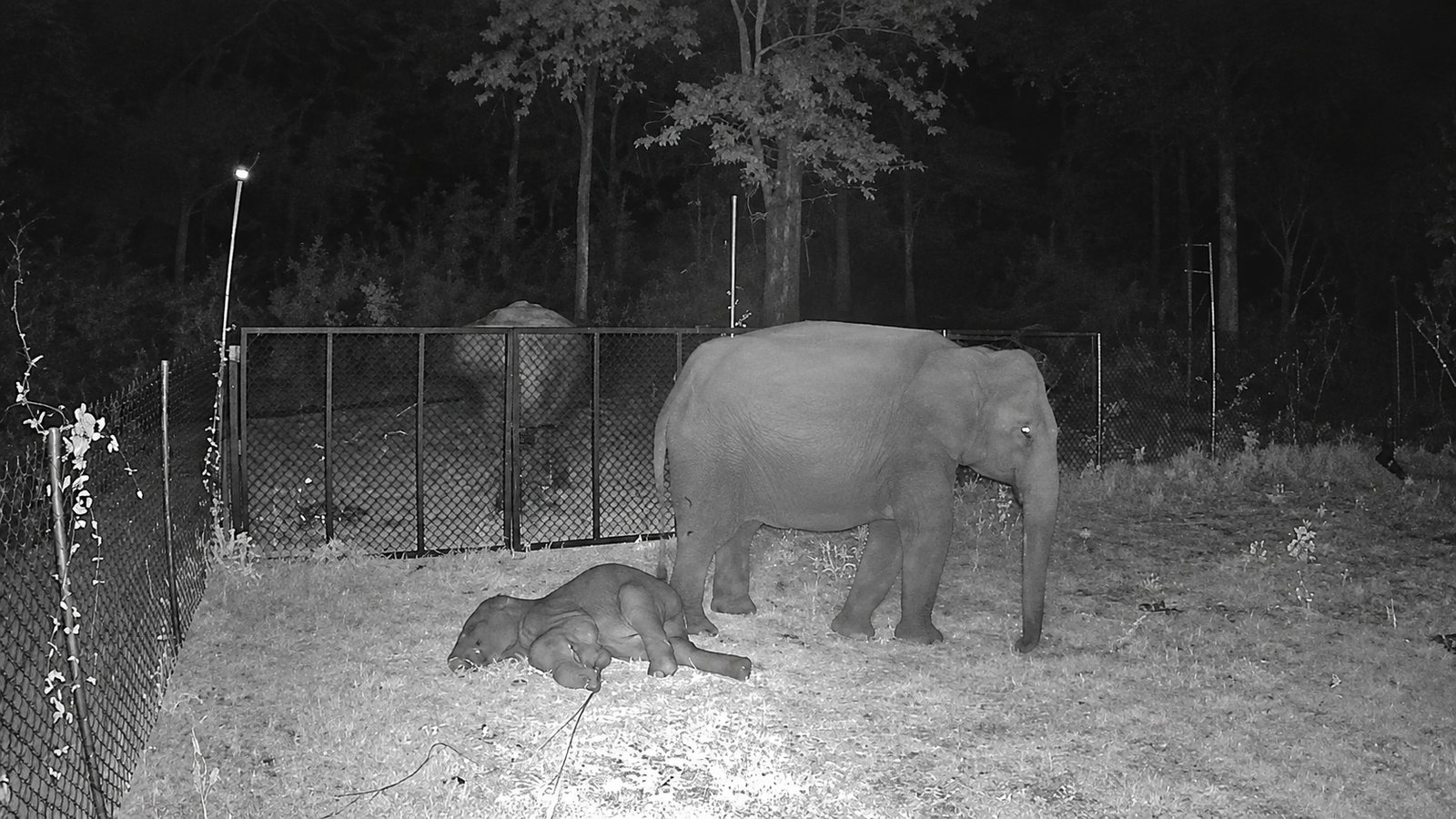
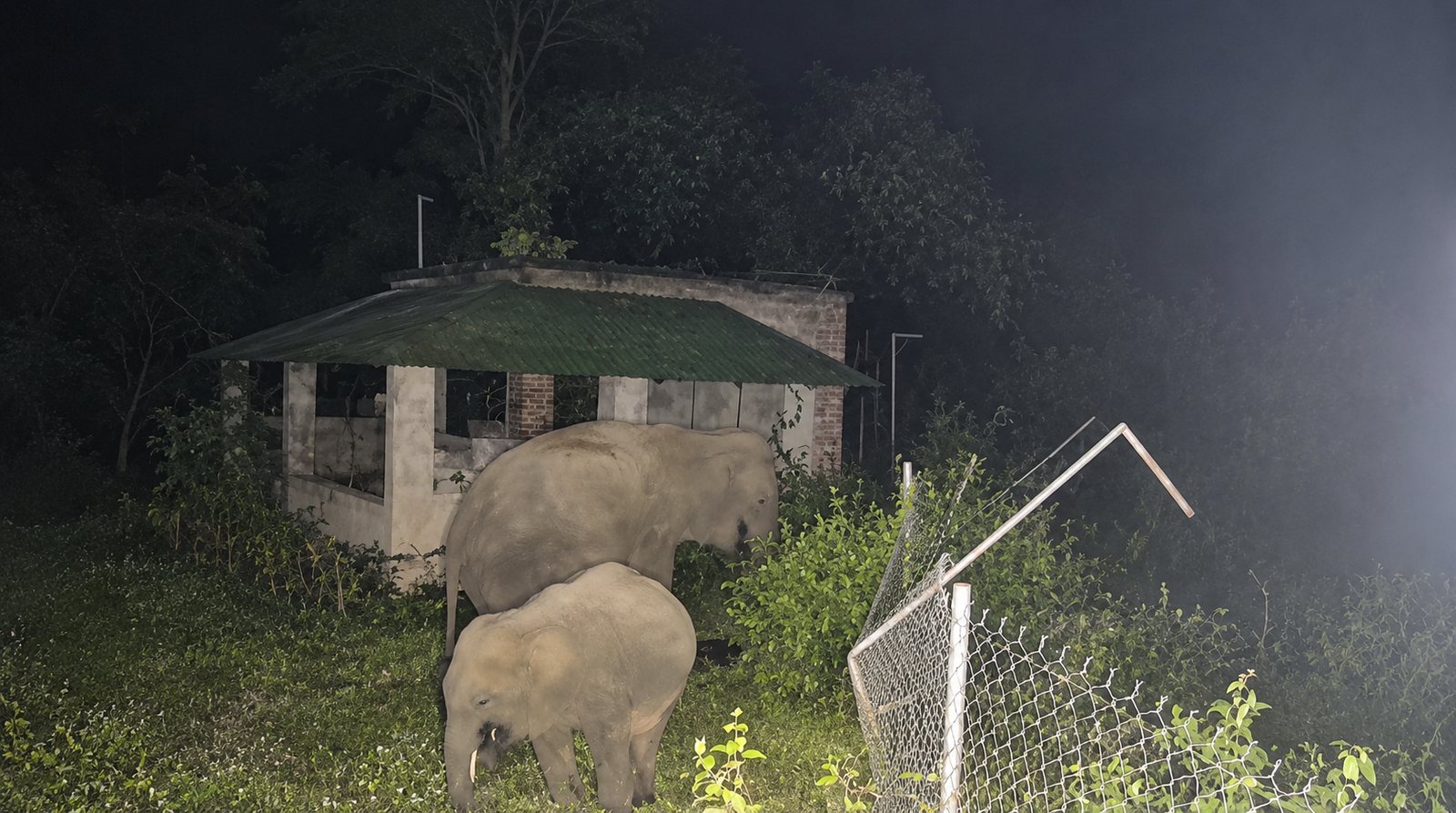
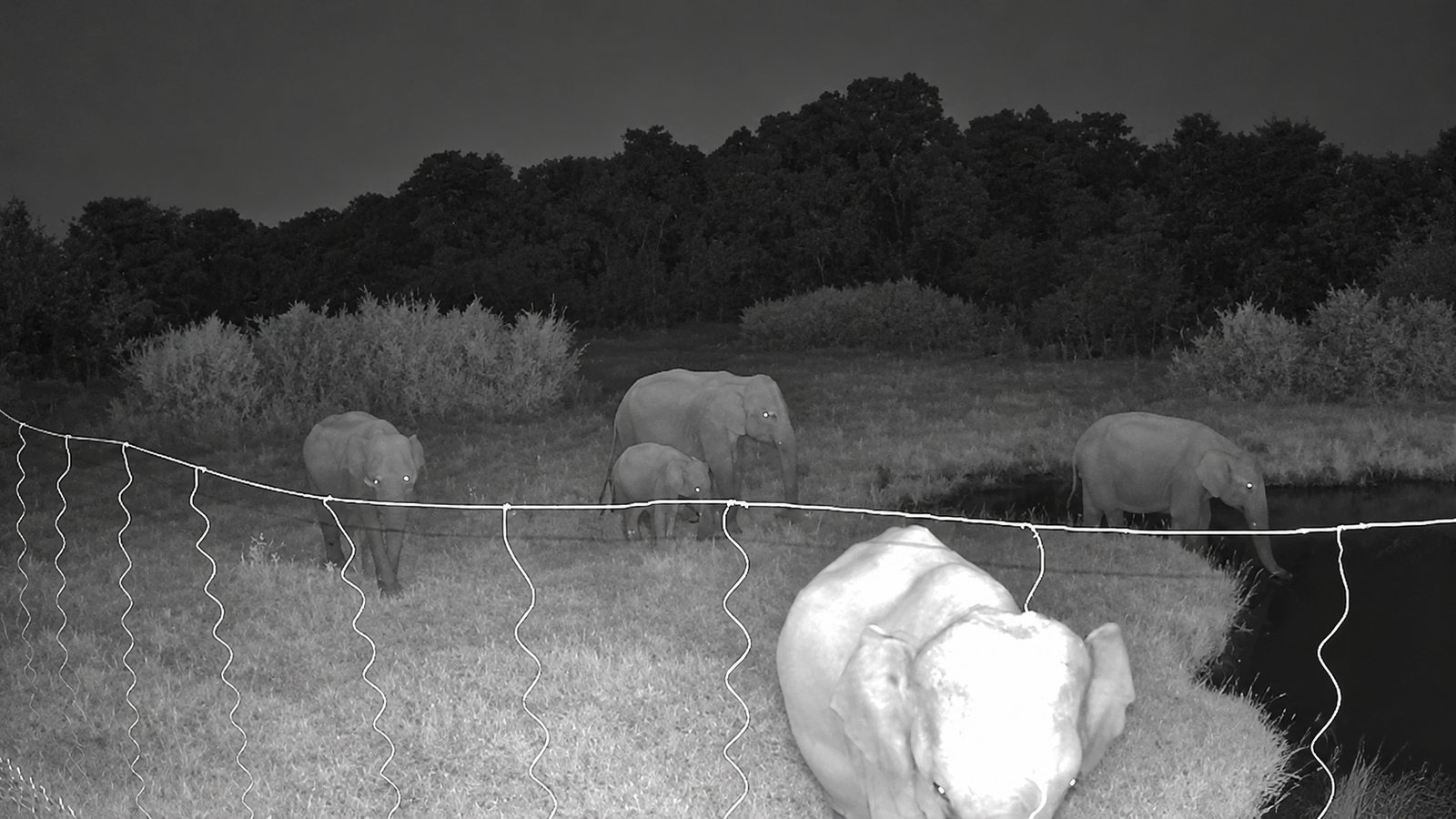
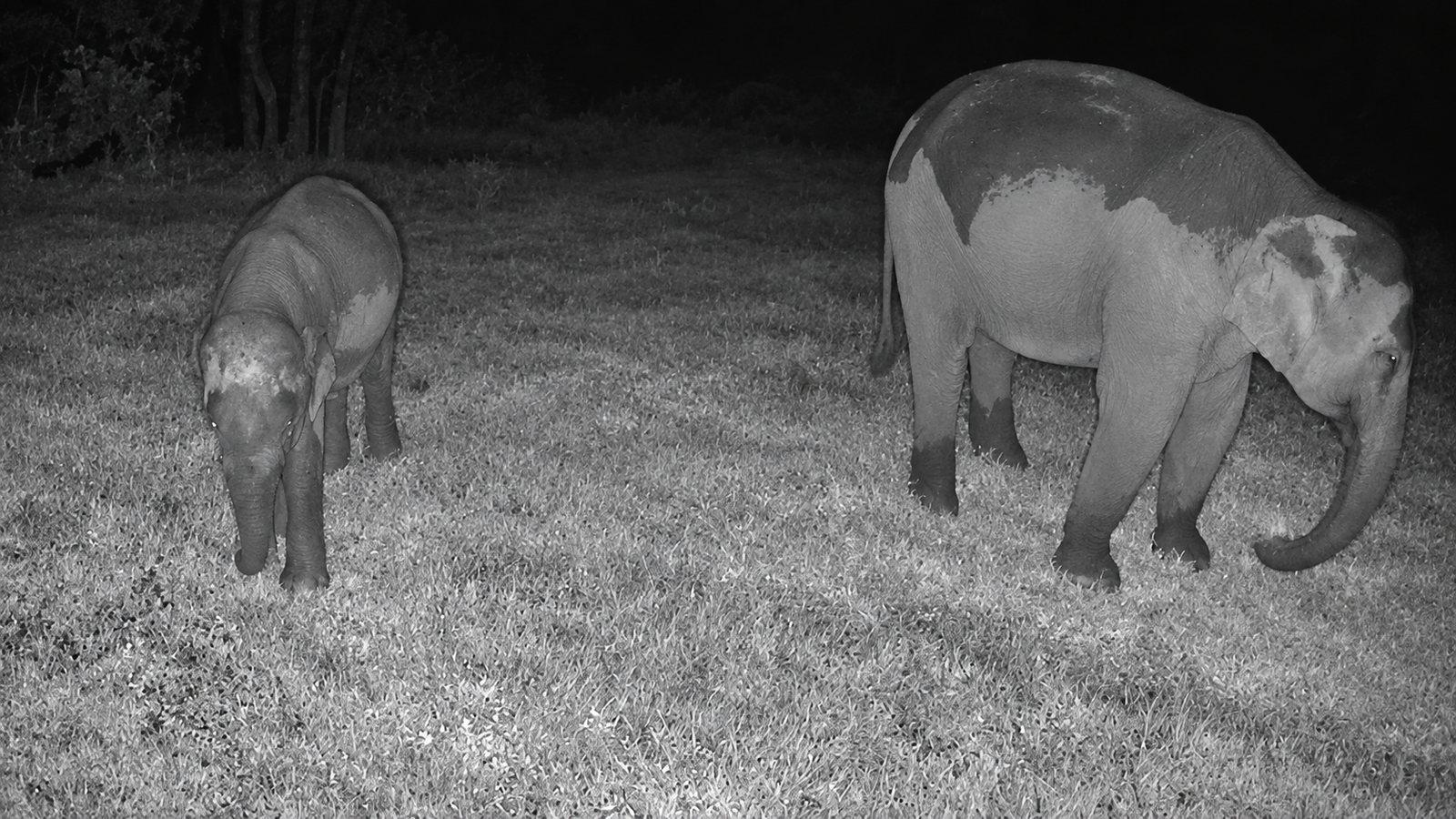
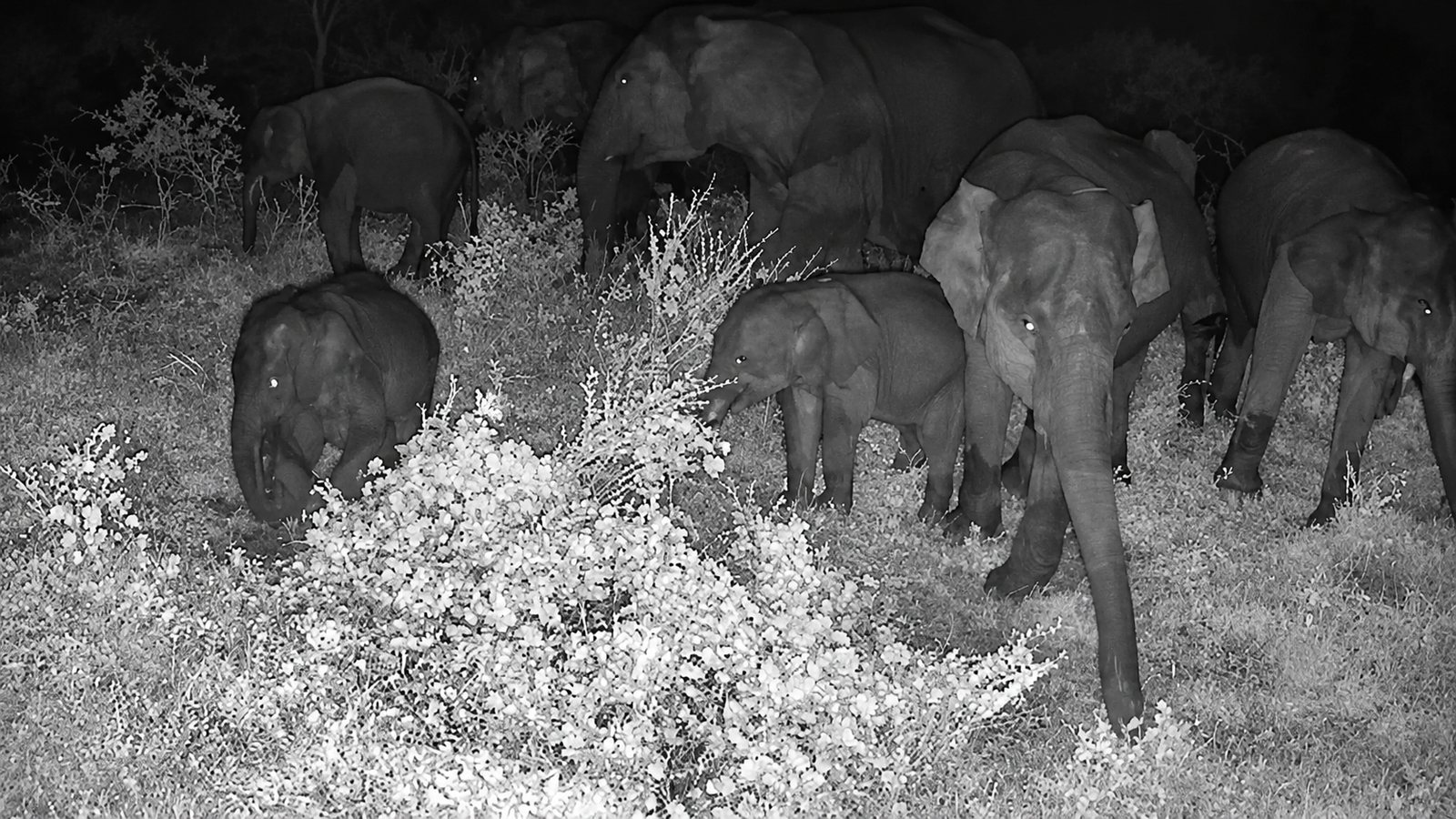
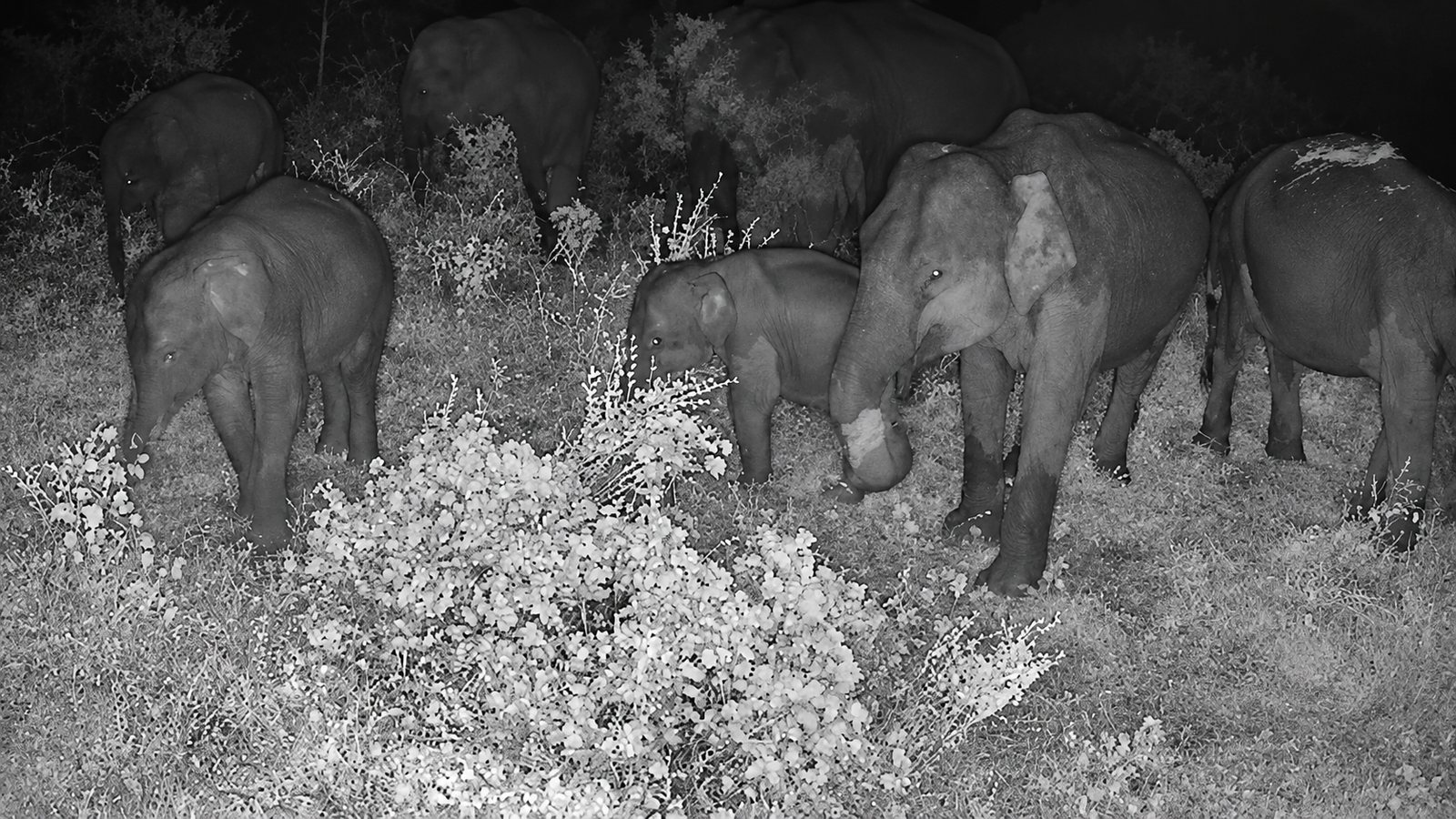
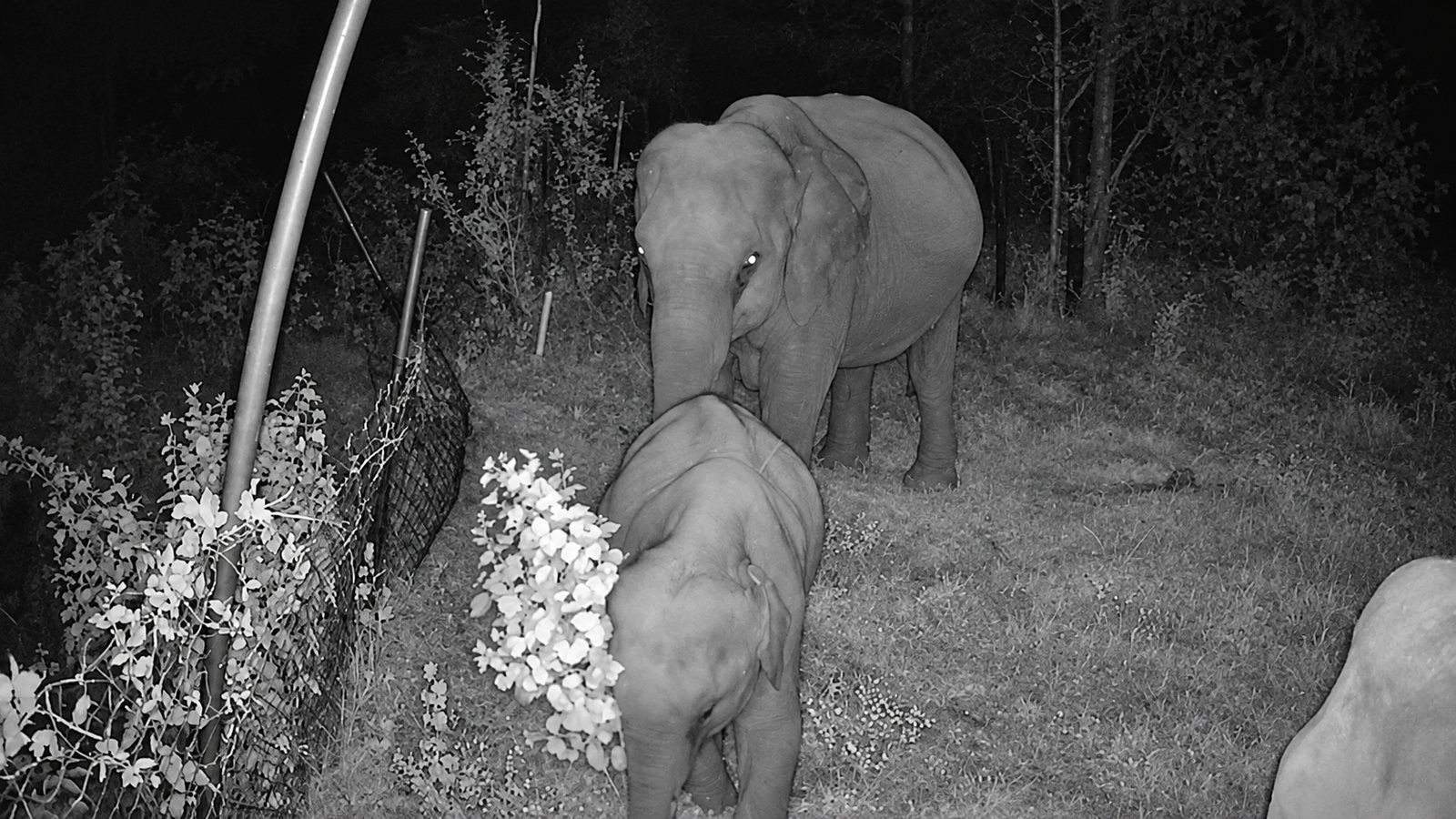
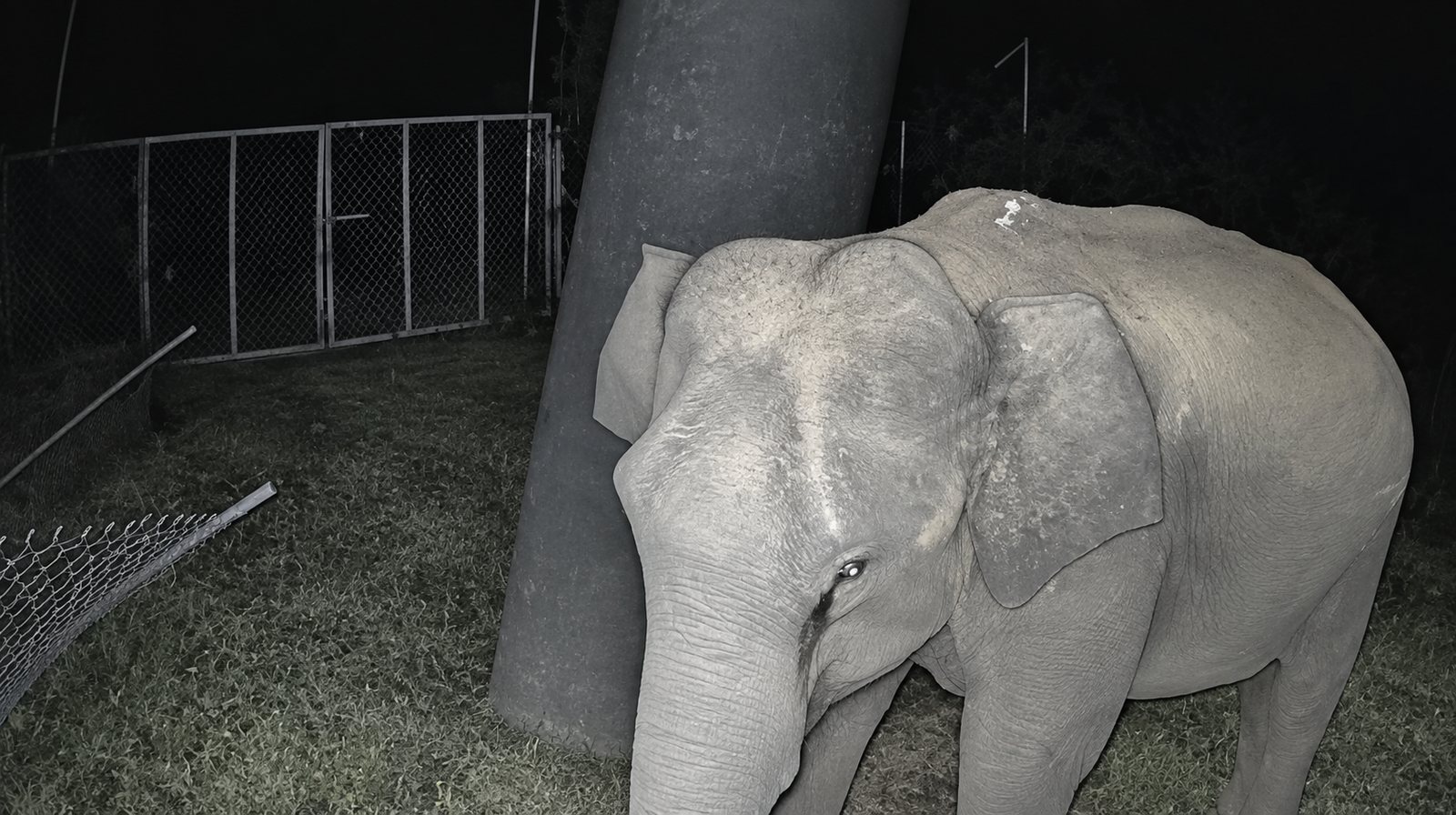
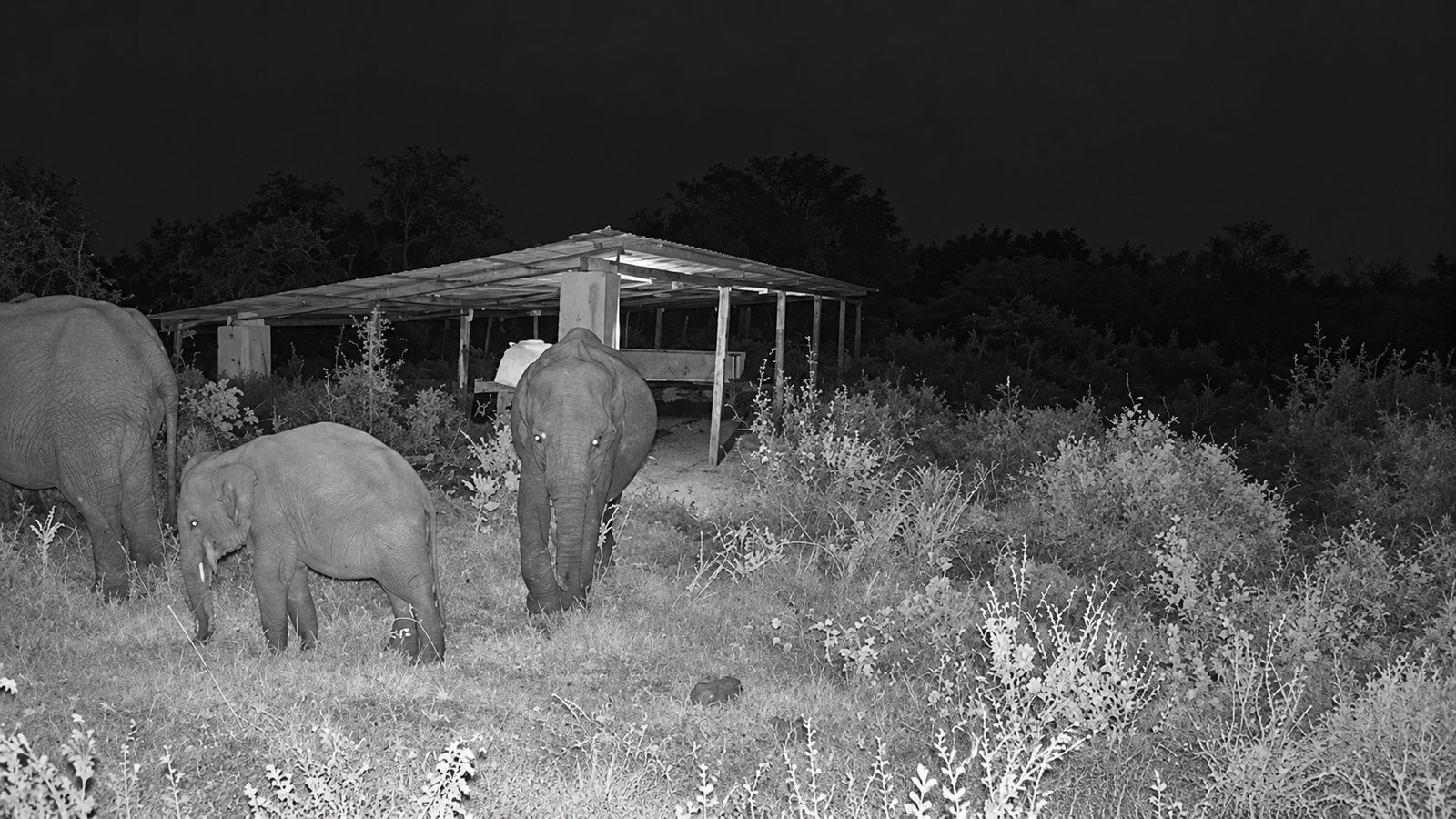
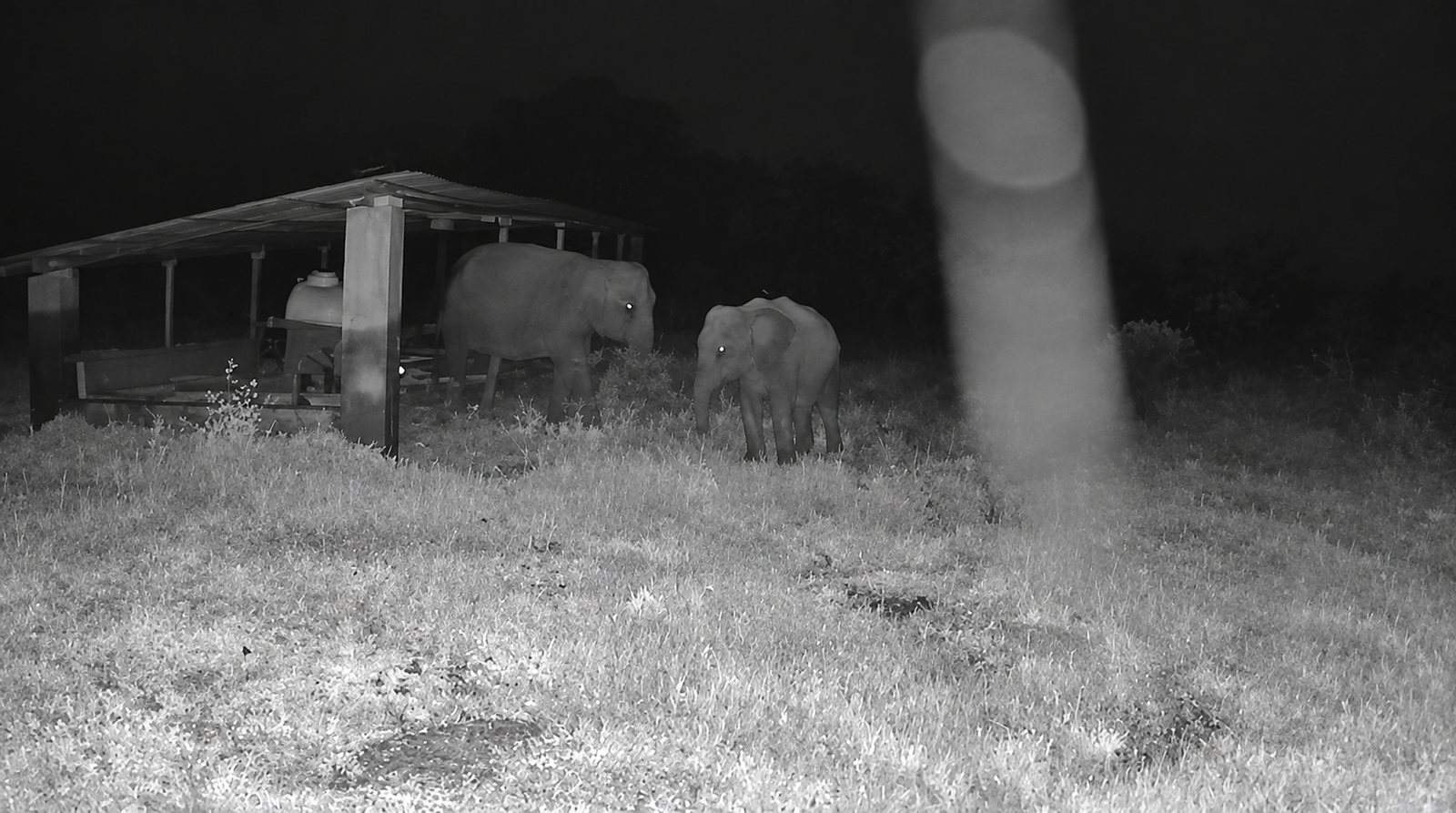
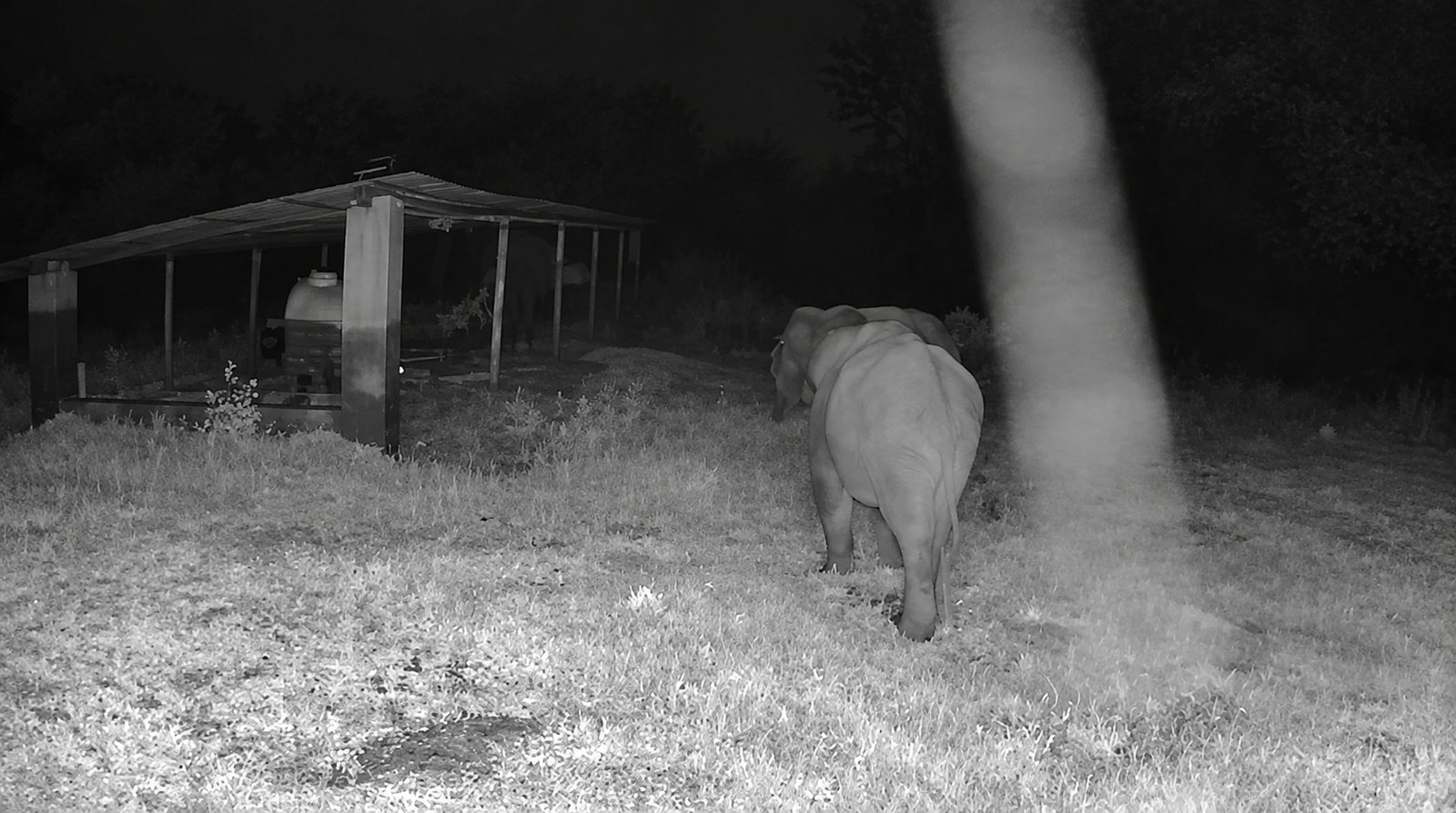
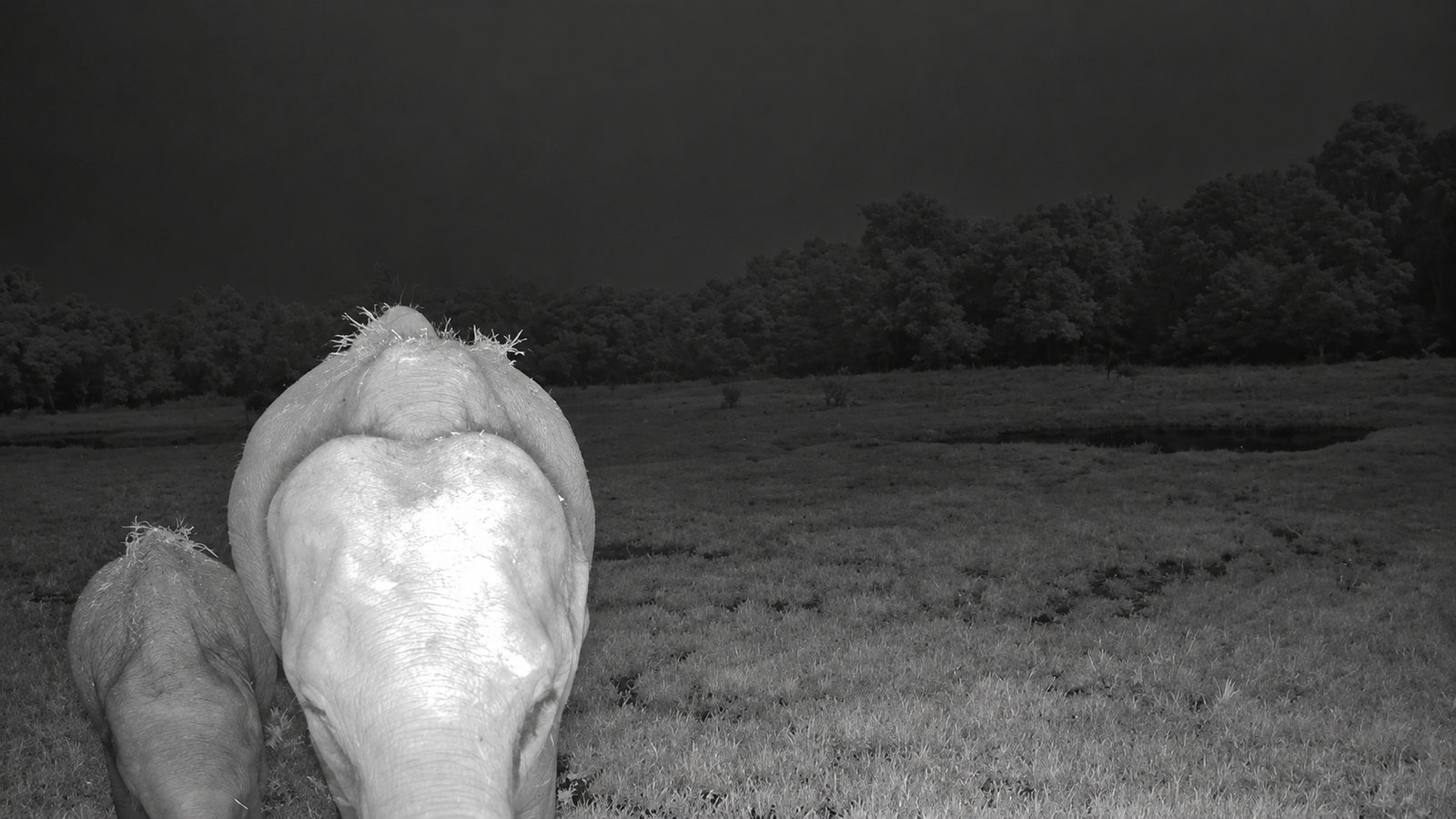
Night-vision photographs from camera traps at Ryaan Ranch. Tap any photo to view it larger.
Elephants of the Landscape
Large and Connected Landscapes
Elephants require large and connected landscapes.
They move in response to food, water, seasonal conditions and other environmental factors. Their movement may take them through forests and adjoining areas.
Ryaan Ranch seeks to understand and respect this natural behavior.
Our conservation work focuses on maintaining suitable habitat and supporting conditions that allow elephants to move as naturally as possible.
Elephant Corridor & Safe Passage
Movement Comes First
Elephant movement is one of the most important considerations in our landscape.
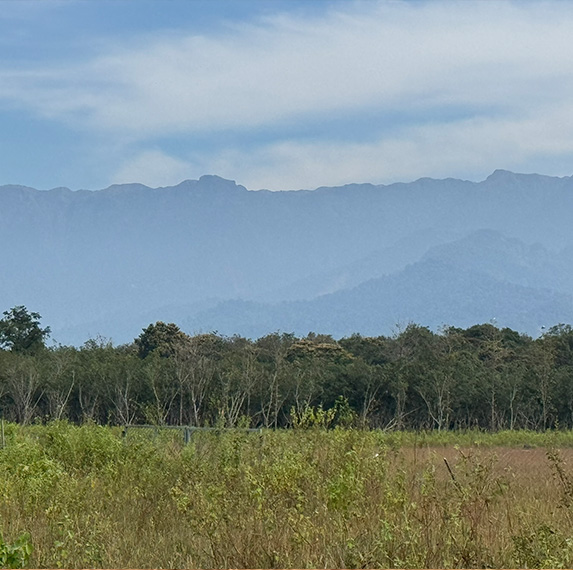
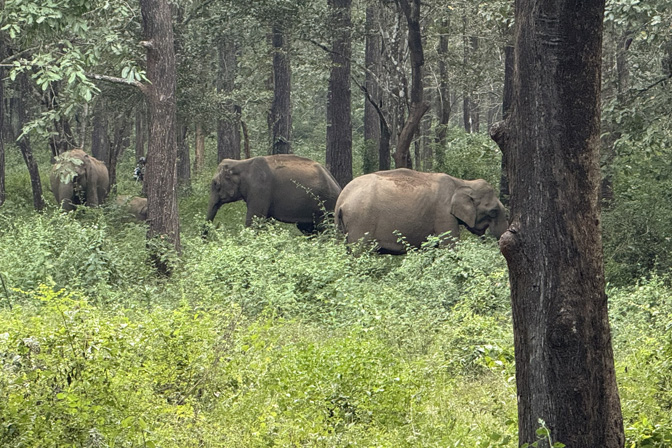
Ryaan Ranch is situated along a forest-edge landscape regularly used by wild elephants. Observations of elephant movement inform our approach to habitat and land stewardship.
The Trust supports the protection of natural movement areas and seeks to avoid unnecessary barriers or disturbance.
A note on the term “elephant corridor”
We use the term elephant corridor in the context of natural movement and landscape connectivity. We do not represent the Ryaan Ranch property itself as a legally notified elephant corridor unless formally designated by the appropriate authority.
Elephant Habitat & Grazing Initiative
Improving Suitable Habitat Conditions
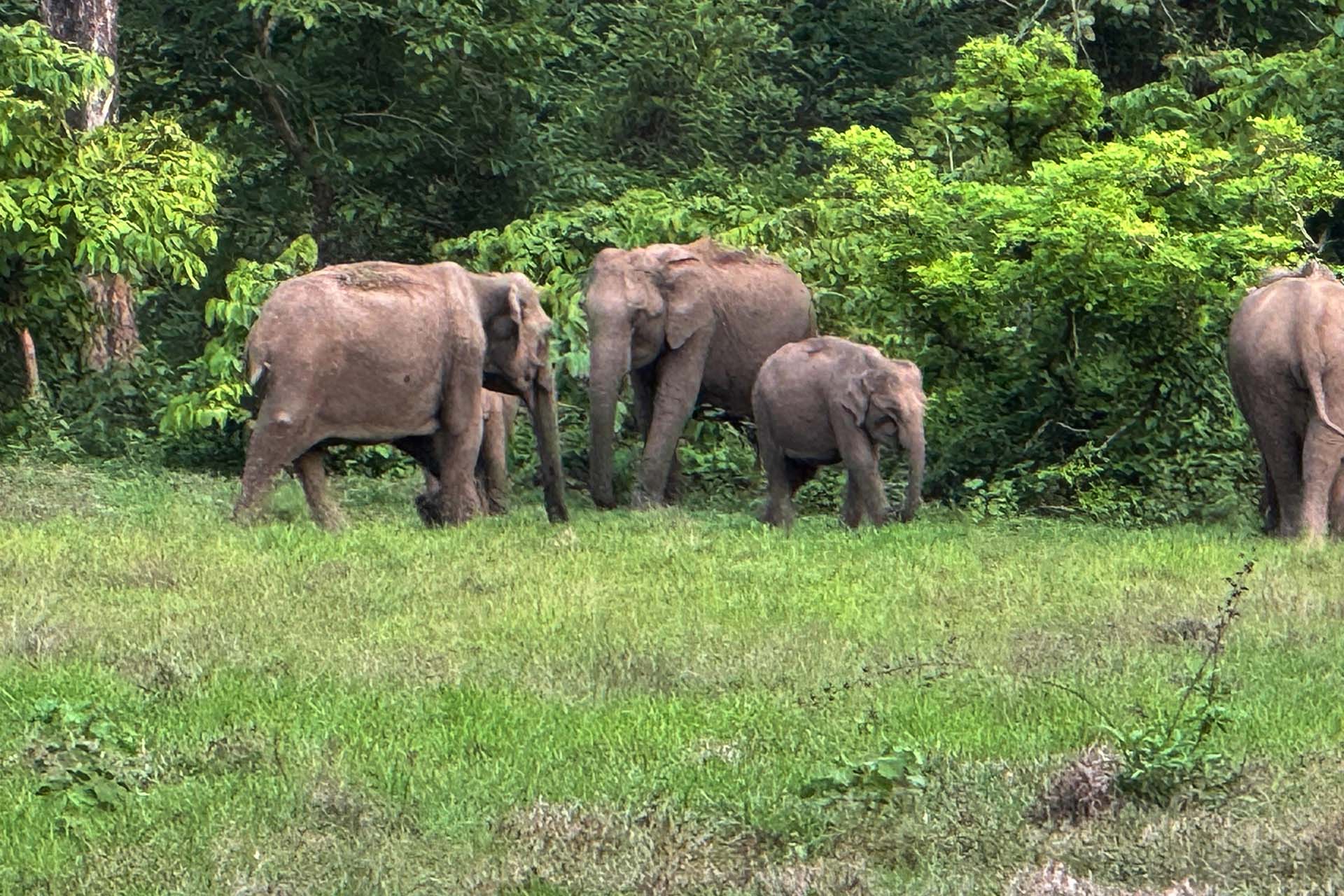
The Elephant Habitat & Grazing Initiative is focused on improving suitable habitat conditions across the property and its surroundings.
- Appropriate vegetation suited to the landscape
- Elephant grasses and grazing areas
- Water availability across the property
- Restoration of degraded patches
- Natural water sources and a pond already present at Ryaan Ranch
- Additional water bodies currently being developed
Careful, informed intervention
Any future intervention will be considered carefully and, where appropriate, informed by wildlife expertise and consultation with relevant authorities.
Human-Elephant Coexistence
Understanding on Both Sides
Coexistence requires understanding on both sides.
Communities need practical information about elephant behavior and movement. Conservation efforts need to recognize the realities of people living near forests.
Ryaan Ranch works with communities around Karulai and Nedumkayam to encourage awareness and responsible coexistence.
Our relationship with the Kerala Forest Department is also an important part of this approach.
Knowledge & Awareness
Recording, Learning and Sharing

Elephant Research & Monitoring
We record elephant sightings, maintain sighting logs and photograph identified elephants where possible. Over time, these records can help us understand patterns of movement and habitat use.

Responsible Handling of Information
Sensitive information will be handled responsibly, and precise wildlife locations will not be publicly disclosed where doing so could create risks.

Elephant Awareness & Education
Ryaan Ranch plans to develop awareness programs that explain elephant behavior, habitat, movement and responsible coexistence.
Give elephants space. Protect their habitat. Build coexistence.
Greater understanding, safer communities and greater respect for elephants.
Rescue Rangers
When Wildlife or Communities Need Help
Rescue Rangers supports wildlife rescue, emergency response and community response.
Meet Rescue Rangers